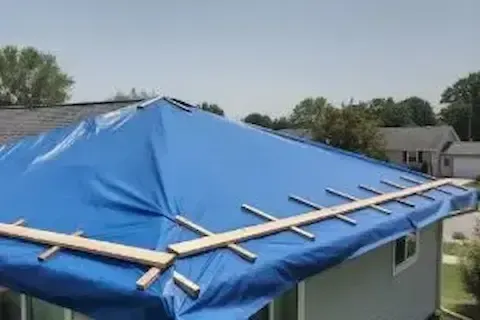
Tarping Your Roof After Hail Storms in Anoka County
A hail storm can move through Anoka County in under an hour and leave behind damage that takes weeks to fully assess and repair. In that gap between the storm passing and a roofing crew arriving with materials, your roof is exposed. Cracked shingles, split seams, and punctured underlayment all create pathways for water to reach the decking, insulation, and interior framing. A properly secured tarp is one of the most effective ways to stop that damage from compounding while you coordinate with your insurance adjuster and schedule a full repair.
Why Hail Damage Calls for Immediate Temporary Protection
Hail damage is different from wind damage or falling debris because it often looks minor from the ground. You might not see obvious holes or displaced shingles, but hail impacts fracture the granule layer on asphalt shingles and compress the mat underneath. That structural compromise weakens the shingle's ability to shed water, especially when rain follows within days of a hail event, which is common during Anoka County's spring and early summer storm seasons.
Once water gets past the shingle layer, it can saturate the roof decking, seep into the attic, and eventually reach ceiling drywall and wall cavities. That secondary damage is often more expensive than the original roof repair. Tarping the most affected sections buys you time without locking you into any particular repair timeline.
What a Proper Tarp Job Actually Requires
Emergency tarping is not simply throwing a blue tarp over your roof. A tarp that isn't anchored correctly can lift in wind, trap standing water, or slide off during the next rain event, making the situation worse. A few specific requirements separate a tarp that holds from one that fails.
- Coverage area: The tarp should extend past the ridge of the roof and down at least four feet beyond the damaged section on all sides to account for wind-driven rain.
- Anchoring method: Weighted lumber boards or sandbags are used to hold edges down and prevent wind from getting underneath. Nailing directly through the tarp into the roof deck is sometimes used for slope-facing edges.
- Tarp weight: Standard 6-mil polyethylene tarps are adequate for short-term coverage. Heavier-duty options are worth using in Anoka County if you're heading into a stretch of forecasted storms.
- Ridge draping: Running the tarp over the ridge and anchoring on both roof planes prevents water from pooling at the peak and flowing under the tarp edge.
Getting these details right matters, especially if you're in a neighborhood like Ham Lake or Andover where wind exposure is higher. A partial or improperly secured tarp can create as much damage as no tarp at all.
When to Tarp Versus When to Wait for a Full Repair
Not every hail event requires tarping. If the hail was small, the storm moved through quickly, and you have no visible entry points, a thorough inspection may be all that's needed before scheduling repairs. Tarping becomes the right call in specific situations:
- You can see displaced, cracked, or punctured shingles from the ground
- There are visible dents or holes in any metal flashing, ridge caps, or pipe boots
- You notice water staining on ceiling drywall within 24 hours of the storm
- Rain is in the forecast within the next few days and repairs cannot be scheduled in time
- Your insurance adjuster cannot get out for an inspection for several days or longer
In those cases, tarping ahead of the adjuster's visit is both protective and practical. Most insurance policies cover emergency mitigation, meaning the cost of professional tarping may be included in your claim. Documenting the tarp installation with photos before and after helps support that portion of the claim.
Common Mistakes Homeowners Make After Hail
The urgency following a storm can lead to decisions that complicate the repair process. A few patterns come up frequently in Anoka County after significant hail events.
Starting repairs before the adjuster visits. If you begin making permanent repairs before your insurance company completes their inspection, you may remove evidence they need to assess the full scope of damage. Temporary tarping does not interfere with the inspection process, but patching shingles or replacing sections prematurely can.
Using inadequate tarping materials. Lightweight tarps sold at hardware stores for general use are not rated for extended outdoor exposure or wind loading. In the time between a hail storm and a completed roof replacement, Anoka County can see additional thunderstorms, heavy rain, and even early fall conditions depending on the time of year. A tarp that degrades or pulls loose within two weeks defeats its purpose.
Ignoring secondary damage signs. A damp smell in the attic, discoloration on ceiling drywall, or swollen wood near skylights or chimneys all indicate water is already moving through the structure. Tarping stops further intrusion, but those areas may need additional remediation once the roof is repaired.
Working With a Local Roofing Team After Hail
After major hail events, demand for roofing services across Anoka County rises quickly. Blaine, Coon Rapids, Lino Lakes, and surrounding communities are all typically affected by the same storm system within hours of each other. That means roofing contractors are fielding dozens of calls simultaneously, and scheduling can stretch out by days or weeks.
Having a Emergency Roof Tarping team that can respond quickly to secure your structure is the practical first move. It keeps your interior protected while the broader scheduling backlog clears. When you're ready for the full repair, the documentation from the tarp installation, the initial inspection, and your adjuster's assessment all combine to support a straightforward claim and replacement process.
Local roofers familiar with Anoka County's storm patterns and the specific product requirements for this climate will also be better positioned to recommend the right shingle system for your replacement. Hail-resistant Class 4 impact-rated shingles are worth considering, particularly if your homeowner's insurance offers a discount for that upgrade. Some carriers in Minnesota actively promote this option for storm-prone zip codes in the metro area.
Closing Perspective
A tarp is a temporary measure, but a well-executed one can be the difference between a roof replacement and a roof replacement plus extensive interior remediation. If a hail storm has moved through your area of Anoka County and you have any uncertainty about the condition of your roof, acting within the first 24 to 48 hours protects both your home and your insurance claim. The for your area can help you move from emergency mitigation to full repair without losing time or coverage.
