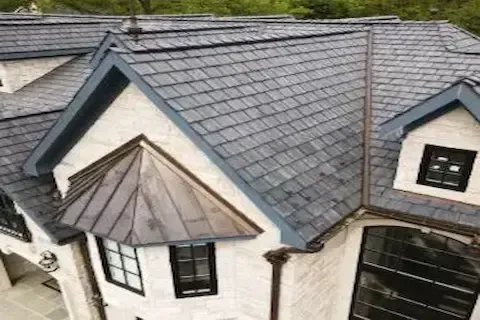
What Class 4 Shingles Look Like After Hail in Blaine
When a hailstorm moves through Blaine, homeowners with Class 4 impact-resistant shingles often find themselves on ladders the next morning, looking for damage and not quite sure what they should be finding. That uncertainty is common, and it matters because Class 4 shingles are engineered to behave very differently than standard three-tab or architectural shingles under hail impact. Knowing what normal post-storm appearance looks like on these shingles helps you make informed decisions about inspections, insurance claims, and whether a contractor is giving you an honest assessment.
How Class 4 Shingles Are Built to Resist Hail
Class 4 is the highest rating under UL 2218, a standardized test where steel balls are dropped onto shingles from specific heights to simulate hail. To earn that rating, a shingle must withstand a two-inch steel ball dropped from 20 feet without cracking or splitting. The materials that typically achieve this are polymer-modified asphalt, rubberized SBS compounds, or impact-modified granule-embedded mats. These formulations give the shingle a degree of elasticity that standard shingles lack entirely.
The practical result is that when hail strikes a Class 4 shingle, energy is partially absorbed and dispersed rather than concentrated at a single fracture point. The shingle flexes slightly rather than breaking. This is why Class 4 Impact-Resistant Shingle Installation is a worthwhile long-term investment for Minnesota homeowners who deal with regular storm seasons.
What You Will Actually See on the Surface After a Storm
This is where most homeowners get confused. After hail, Class 4 shingles often look largely intact, and that appearance can be misleading in both directions. Some damage is real but minor. Some apparent damage is purely cosmetic. And some inspectors, particularly those working on commission for roofing replacements, may exaggerate what they find.
Here is what you should expect to see on a healthy Class 4 roof after a Blaine hailstorm:
- Surface scuffing or mat burnishing: Hail can brush away a thin layer of surface granules, leaving lighter-colored patches that look like abrasions. This is cosmetic on a Class 4 shingle and does not indicate structural damage.
- Shallow impact marks or dimples: A well-performing Class 4 shingle may show a slight depression where hail struck, but the mat beneath remains intact. No cracking, no fracturing, no exposed substrate.
- Slight granule displacement: Some granules will migrate to gutters after any storm, including those with only wind and no hail. Moderate granule loss in gutters after a significant storm is not automatically evidence of Class 4 failure.
- Color variation: The surface appearance of the shingle may look inconsistent after impact marks accumulate across multiple hits. This does not compromise the waterproofing function of the shingle.
What Should Not Be Present on a Functioning Class 4 Shingle
There are clear signs that indicate actual damage rather than cosmetic wear. On a Class 4 shingle that has been struck by unusually large hail, such as the two-inch or larger stones that do occasionally reach Blaine during severe convective storms, you might find:
- Exposed fiberglass mat: If the granule layer has been fully stripped away and the woven mat beneath is visible, that is functional damage. Sunlight and moisture can now accelerate degradation at that point.
- Cracking or splitting through the shingle body: While rare on a legitimate Class 4 product under normal hail conditions, it can occur with extremely large stones or when shingles are aged and have lost flexibility.
- Punctures or perforations: An actual hole in the shingle is evidence of impact damage significant enough to require repair. This is uncommon on Class 4 material with standard Minnesota hail sizes.
- Lifted or separated edges: If hail impact combined with wind uplift has caused tab or laminate separation, the sealed edges may need attention even if the surface otherwise looks intact.
The Insurance Inspection Problem in Blaine
One of the most important things to understand about Class 4 shingles after hail is that they change the insurance calculus in ways that not every homeowner or contractor anticipates. Many Blaine homeowners originally chose Class 4 shingles to qualify for premium discounts from their insurer. That same insurer, when handling a post-storm claim, may send an adjuster who is less familiar with what normal Class 4 post-storm appearance looks like.
Adjusters accustomed to evaluating standard shingles may flag impact marks on Class 4 material as damage when those marks fall within the acceptable performance range of the product. Conversely, a contractor eager to sell a replacement job may confirm any finding the adjuster makes. Your best protection is an independent roof inspection from a contractor who understands Class 4 product specifications and can differentiate cosmetic hail marking from functional damage.
Minnesota's hail season tends to peak from May through August, and storms that produce the quarter-sized to golf-ball-sized hail common in Anoka County are the ones most likely to affect surface appearance without causing functional failure on a Class 4 roof. Smaller hail, which is more frequent, typically leaves no visible trace at all on quality impact-resistant material.
Aging Class 4 Shingles Behave Differently Than New Ones
A Class 4 shingle that is ten or more years old has experienced UV exposure, thermal cycling through Minnesota winters and summers, and cumulative granule loss. The SBS or polymer compounds that give the shingle its flexibility do degrade over time, though more slowly than standard asphalt. An older Class 4 shingle will show more visible impact marking after a given hailstorm than a newer one, and the threshold at which cosmetic damage crosses into functional damage is lower.
This means the age of your shingles is a relevant variable when you are evaluating post-storm appearance. A five-year-old Class 4 roof with moderate surface scuffing after a storm is in very different condition than a fifteen-year-old Class 4 roof with the same appearance.
What to Do After a Storm in Blaine
Start with your gutters. Significant granule accumulation after a storm suggests more surface disruption than cosmetic. Then do a visual scan from the ground using binoculars if possible. Look for any obvious color irregularity, missing shingle sections, or lifted edges. If anything looks unusual, schedule a professional inspection rather than attempting to walk the roof yourself.
Document everything with photos before any contractor visits. Keep your original installation paperwork, which should specify the product name and Class 4 rating. That documentation becomes useful if you need to make an insurance claim or dispute an assessment.
Understanding how your specific shingles should perform is part of owning a higher-quality roof. If you want a clear picture of what normal post-storm appearance looks like for the product on your home, reviewing manufacturer documentation alongside a qualified inspection gives you the most reliable baseline for any decisions that follow.
Blaine homeowners who installed Class 4 material specifically for storm protection deserve accurate information about what that protection actually looks like in practice. Surface marks and minor scuffing after a storm are not failures. Cracks, exposed mat, and perforations are. Knowing the difference keeps you from replacing a roof that still has years of life, and from ignoring damage that genuinely needs attention. For more on how storm seasons affect roofing decisions across the area, see this overview of .
