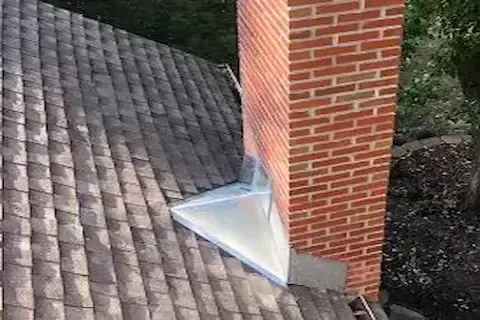
Chimney Flashing Repair for Blaine Minnesota Homes
Chimney flashing is the single most common source of roof leaks in Blaine, Minnesota homes. It sits at a structural junction where two very different materials meet — masonry and roofing — and every season of freeze-thaw cycling, heavy snow load, and summer heat expansion works to loosen that connection. When flashing fails, water doesn't just drip into the attic. It travels along rafters, soaks insulation, and eventually shows up as a stain on a ceiling two rooms away from the actual entry point. Understanding how flashing works, and why it fails, helps you catch problems early and make informed decisions when you talk to a contractor.
What Chimney Flashing Actually Is
Chimney flashing is a system of metal pieces — not a single strip — that seals the gap between the chimney structure and the surrounding roof surface. A properly installed system has at least two components working together. Step flashing consists of individual L-shaped metal pieces woven into the shingle courses up the sides of the chimney. Counter flashing, sometimes called cap flashing, is embedded directly into the mortar joints of the chimney and folds down over the step flashing to create a layered, overlapping seal.
At the base of the chimney, where water runs off the roof surface and hits the uphill side of the masonry, a piece called the apron or base flashing redirects flow around the sides. At the top of the downhill side, a saddle or cricket — a small peaked structure — is often built to divert water around the back of the chimney rather than allowing it to pond against the masonry. Homes in Blaine with wider chimneys on steeper roof pitches are especially vulnerable without a properly sized cricket.
Why Blaine Homes Face Accelerated Flashing Wear
Minnesota's climate applies enormous stress to every component of a roofing system, but flashing takes that stress at a particularly vulnerable joint. During a typical Blaine winter, temperatures can swing from well below zero to above freezing within the same week. That repeated thermal cycling causes metal flashing to expand and contract, and over several years it works loose from caulk, sealant, and mortar. When the seal opens even slightly, water enters and then freezes again inside the gap, widening it further each cycle.
Mortar joints in older brick chimneys are another failure point specific to this region. As the mortar between bricks deteriorates — a process accelerated by moisture and freeze-thaw action — the counter flashing embedded in those joints loosens. Once counter flashing pulls away from the masonry, the overlap that keeps water out disappears entirely. Ice dams, a common problem on Blaine homes with inadequate attic insulation, also force water laterally under flashing that would otherwise shed it cleanly.
Recognizing the Signs of Flashing Failure
Water stains on ceilings or walls near the chimney are the most obvious sign, but by the time they appear, damage has usually been building for months. Other indicators are easier to catch early if you know where to look. On the roof surface, lifted or buckled step flashing at the chimney sides is visible from a safe distance with binoculars. Rust streaks running down from the flashing onto shingles indicate that older galvanized metal has started to corrode through. Missing counter flashing, visible as an open gap between the metal and the masonry, is an immediate leak risk.
Inside the attic, dark staining or active moisture on the rafters near the chimney chase is a clear signal. Efflorescence — white salt deposits — on the inside face of the chimney masonry means water has been moving through the brick. If you notice any of these signs after the spring thaw or following heavy summer storms, scheduling an inspection before the next Blaine winter season begins is the most cost-effective path forward.
Repair vs. Full Replacement
Not every flashing problem requires a complete tear-out and reinstall. The right repair approach depends on what failed and how extensively. Localized sealant failures, where caulk has cracked or separated but the metal itself is intact and properly positioned, can often be resolved with proper cleaning and resealing using an appropriate roofing-grade sealant. Counter flashing that has pulled from deteriorated mortar joints can sometimes be reset and tuck-pointed without disturbing the shingles below.
Full replacement is the correct choice when the metal itself is corroded, bent, or improperly sized — a situation common in older Blaine homes where original builders used undersized flashing or applied it with improper overlaps. Replacement is also warranted when step flashing was never woven into the shingle courses correctly, which is a common error in lower-quality re-roofing work. If you're replacing the roof anyway, new flashing should always be installed at the same time. Carrying old flashing forward onto a new roof is a shortcut that creates a leak within a few seasons. For a complete evaluation of what your situation requires, consult a qualified Roof Flashing Repair & Replacement contractor who can assess the full system, not just the visible surface.
Material Choices for Minnesota Conditions
Galvanized steel is the most common flashing material and performs adequately when properly installed and maintained. However, for Blaine homes with chimneys that will be difficult to access for regular inspections, aluminum or copper offer longer service lives. Aluminum is lightweight, corrosion-resistant, and works well with most shingle types. Copper is the premium option — it lasts for decades, develops a protective patina, and is particularly suited for chimneys on homes with cedar or slate roofing where longevity matters across the full system.
Avoid relying on roofing cement or butyl tape as a primary seal between the counter flashing and masonry. These products are appropriate for specific transition points and supplemental sealing, but they are not substitutes for correctly embedded counter flashing. Products marketed as all-in-one chimney flashing systems that use only adhesive membranes also have a poor track record in Minnesota's climate — the thermal cycling that stresses metal flashing is even harder on adhesive bonds.
What to Expect from a Professional Flashing Repair
A qualified contractor will inspect the full flashing system before quoting any work. That means examining step, counter, apron, and saddle components individually, checking mortar joint condition, and looking at the shingle condition immediately surrounding the chimney. A repair scoped correctly from the beginning avoids the situation where a homeowner pays for sealant work in the spring only to need a full replacement after the following winter.
Reputable flashing repairs in the Blaine area typically include cleaning the contact surfaces, removing deteriorated sealant and mortar, setting new or repositioned counter flashing into properly cut mortar joints, and applying appropriate sealant at transition points. If the cricket is absent or undersized on a wider chimney, a well-qualified contractor will flag that as part of the scope rather than leaving it as a future leak waiting to happen.
Chimney flashing repair is not a project that rewards the cheapest bid. In a climate like Blaine's, where the joint will face extreme thermal stress every single winter, the quality of the installation and the correctness of the material choices determine whether the repair holds for two years or twenty.
