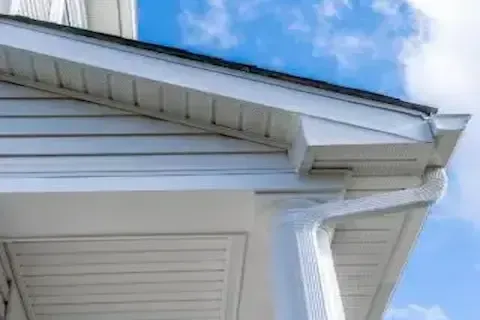
Aluminum Soffit Installation in Anoka County Homes
Replacing wood soffit with aluminum is one of the quieter upgrades homeowners in Anoka County make — quiet in the sense that nobody really notices until you do it. Once the new panels go up, the difference in cleanliness, durability, and low maintenance becomes obvious pretty fast. Aluminum soffit holds up against Minnesota winters in a way that painted wood simply cannot. It does not absorb moisture, it does not rot behind the fascia, and it does not need repainting every few years to stay presentable.
Why Aluminum Outperforms Wood in Minnesota Climates
Wood soffit has a long track record, but the freeze-thaw cycles that define winters in places like Blaine and Andover are genuinely hard on it. Water gets into the grain, expands when it freezes, and begins breaking down the wood over time. Paint peeling off the underside of your eaves is usually the first sign of trouble, followed by soft spots and eventually rot that spreads into the fascia board and rafter tails.
Aluminum soffit eliminates that cycle almost entirely. The material does not absorb water, so there is nothing to freeze and expand. The finish is baked on at the factory rather than applied by brush or roller, which means it adheres differently and does not peel the same way field-applied paint does. In a region where temperatures swing from below zero in January to the high eighties in July, that stability matters more than it might in a milder climate.
Vented vs. Solid Panels and Attic Airflow
One of the most important decisions during aluminum soffit installation is whether to use vented panels, solid panels, or a combination. This choice directly affects how your attic breathes.
Attic ventilation works as a balanced system. Air enters through the soffit at the eaves, travels up through the attic space, and exits through ridge or gable vents near the peak. If the soffit is solid — or blocked by insulation in the attic — that intake is choked off. The result is heat and moisture buildup that shortens the life of your roof deck, promotes ice dam formation in winter, and raises cooling costs in summer.
Vented aluminum soffit panels have small perforations that allow air to pass through while keeping insects and debris out. For most homes in Anoka County, a mix of vented and solid panels works well, with vented panels positioned along the outer portion of the soffit where airflow is most effective. A contractor familiar with local building conditions can evaluate your current intake and help you get the balance right.
If you are also dealing with fascia damage, it makes sense to address both at the same time. Our Soffit & Fascia Repair service covers full replacement or repair so the finished product is cohesive and properly sealed.
Color Matching and Curb Appeal Considerations
Aluminum soffit comes in a wide range of factory colors, and matching it to your fascia and gutters is easier now than it used to be. Most manufacturers offer coordinating systems where soffit, fascia cladding, and gutter coil are available in the same color family. White and almond remain the most common choices in neighborhoods across Blaine and Ham Lake, but deeper tones like bronze and clay have become more popular as exterior color palettes shift toward warmer neutrals.
The goal is visual continuity. When soffit, fascia, and gutters all share a finish, the roofline looks intentional rather than assembled from whatever was on hand. If your home has aluminum or vinyl siding, your contractor can usually source soffit material that coordinates with the siding manufacturer's color line, which simplifies the matching process considerably.
What the Installation Process Actually Involves
Aluminum soffit installation starts with removing whatever is already there — whether that is old wood boards, deteriorated aluminum, or original plywood. The contractor inspects the wood structure behind the soffit, checking the lookout boards, rafter tails, and fascia for any rot or damage that needs to be addressed before new material goes on. Skipping this step leads to problems later.
Once the substrate is sound, an F-channel or J-channel is fastened along the wall to receive the inner edge of the soffit panel. The panels are then measured, cut to width, and slid into position between the channel at the wall and the fascia at the outer edge. Aluminum cuts cleanly with a hand brake or tin snips, and it can be handled in most weather conditions, which matters in a state where installation windows are not always predictable.
Corners, inside angles, and penetrations for vent pipes or lights require additional trim pieces to keep everything weather-tight. A finished installation should have no visible gaps at the wall, no loose panels, and no sections where the channel does not fully capture the panel edge. These details separate a durable installation from one that starts pulling loose after the first hard wind.
Common Mistakes to Avoid
Homeowners who approach soffit installation as a straightforward DIY project sometimes underestimate the trim and channel work. Panels that are cut slightly too long bow under heat. Panels cut too short rattle and allow drafts. The channel needs to be level and properly fastened to the wall framing, not just the sheathing. If the fascia board behind the aluminum fascia cladding is rotted, installing new aluminum over it just delays the problem — it does not solve it.
Another common error is blocking soffit vents with attic insulation. This happens when insulation is added during an energy audit or renovation and the baffles that should keep the eave channel clear are not installed. The soffit looks fine from outside, but the airflow is gone. If you are adding insulation while also updating your soffit, coordinate those two projects carefully.
Local Installation Conditions Worth Knowing
Anoka County's housing stock includes a lot of homes built in the 1970s through 1990s, many of which still have original wood soffit or first-generation aluminum that has seen better days. If your home falls in that range, there is a reasonable chance the current soffit has never been fully replaced. Getting it inspected before problems become visible is worth doing, especially if you are already scheduling roofing or gutter work.
Contractors working in the area know that wind-driven rain from the north and west can be aggressive along open stretches common in communities like Oak Grove and Ramsey. A soffit installation that handles standing water well in calm conditions but gaps at the fascia junction during heavy rain is not truly finished.
For homeowners weighing the full scope of what an exterior update involves, reading about can help you understand how soffit fits into a broader roofline plan.
Making the Investment Work Long-Term
Aluminum soffit does not require painting, does not rot, and does not need much attention once it is installed correctly. The practical value is in what you stop spending — no periodic repainting, no rot repairs, no callbacks for panels that were never properly secured in the first place. In a county where weather does real work on exterior materials, choosing aluminum is less about aesthetics and more about durability. Done right, a soffit installation should last decades without meaningful intervention.
